
The first sign is usually the paycheck itself. You open the pay stub expecting the usual number, and a big slice is just gone, handed to a creditor before the money ever reaches you. No warning that week, no phone call, just a lighter deposit and a line you don’t recognize. If that’s where you are right now, take a breath. A garnishment feels final, but it almost never is.
Here’s the part most people don’t realize: you have real options at nearly every stage, and some can shrink or stop the garnishment within a few weeks. Which one fits depends on how the debt got here and how much of your pay is being taken. Let’s walk through what’s actually on the table.
First, understand how the garnishment started
For most ordinary debts, a creditor can’t touch your wages out of nowhere. They have to sue you, win, and get a court judgment first. Only then can they ask the court for an order that goes to your employer, who then has to hold back part of your check. If you want the full picture, our guide to how wage garnishment works breaks the process down step by step.
A few debts skip the lawsuit entirely. Unpaid child support, back taxes, and defaulted federal student loans can be garnished through their own processes without a separate court case. The strategy for stopping those looks different, so it helps to know which kind of debt you’re dealing with before you pick a move.

How to stop wage garnishment: your five real options
There isn’t one magic button. Learning how to stop wage garnishment usually means picking the option that matches your situation, or stacking a couple of them together. Here are the five that work for most people, roughly from the fastest to the most drastic.
- File a claim of exemption to protect income you can’t afford to lose.
- Point to the federal cap if they’re taking too much.
- Negotiate a settlement or payment plan directly with the creditor.
- Fight the judgment itself if it never should have happened.
- File bankruptcy as a last resort, which freezes garnishment immediately.

File a claim of exemption, the step most people skip
This is the option people miss most often, and it’s frequently the best one. If the garnishment is leaving you unable to cover basic needs like rent, food, and utilities for your family, you can file a claim of exemption with the court or the sheriff asking to lower or stop the amount being taken.
Certain income is protected outright. Social Security, disability, veterans benefits, retirement pensions, child support, and public assistance generally can’t be garnished by ordinary creditors. If money like that is being pulled, saying so in a claim of exemption can get it returned.
Watch the clock here. The window to file is often short, sometimes only five to ten days after you get the garnishment notice, and it varies by state. You’ll usually fill out a form and a short financial statement. If the creditor disagrees, a judge sets a hearing and decides, often within about a month. Win, and the court orders the garnishment reduced or stopped and any exempt money returned.
Know the federal cap on what they can take
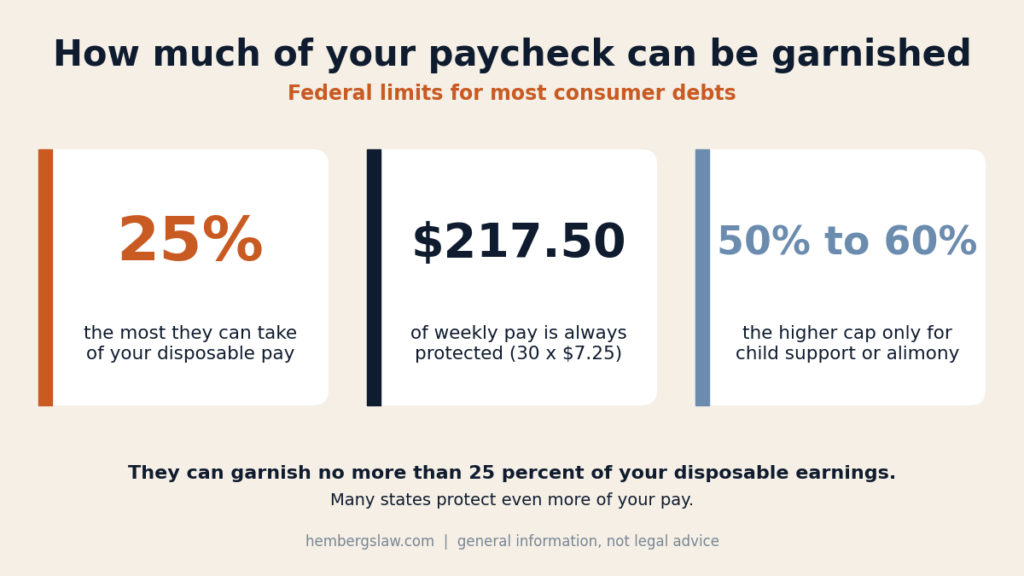
Even a valid garnishment has a ceiling. Under federal law, for most consumer debts a creditor can take no more than the smaller of two numbers: 25 percent of your disposable earnings, or the amount your weekly disposable earnings run above 30 times the federal minimum wage. Disposable earnings are what’s left after legally required deductions like taxes.
Thirty times the current federal minimum wage of $7.25 an hour works out to $217.50 a week that’s fully protected. If your disposable earnings are at or below that, no ordinary garnishment is allowed at all. Child support and alimony are the exception and can reach higher, up to 50 or 60 percent depending on whether you’re supporting another spouse or child.
Many states protect even more than the federal floor does, and a handful bar most wage garnishment for consumer debt entirely. If the amount coming out of your check looks bigger than these limits allow, that alone can be grounds to object.
Negotiate directly with the creditor
Garnishment is expensive and slow for the creditor too, and that works in your favor. Many creditors and collectors will happily trade the garnishment for a lump sum settlement for less than the full balance, or a steady payment plan they can count on.
Call or write and make a concrete offer you can actually keep. If you reach a deal, get every term in writing before you send a dollar, including a clear statement that they’ll release the garnishment once you’ve paid. A verbal promise from a collections agent isn’t worth much when the next paycheck gets docked anyway.
If a debt collector is the one garnishing you, confirm the debt is really yours and still collectible. An old debt past the deadline to sue, or one the collector can’t validate, changes the whole conversation.

Fight the judgment if it never should have happened
Here’s a fact that surprises people: a huge share of debt judgments are default judgments, meaning the person never showed up to court. Sometimes that’s because they were never properly served with the lawsuit and had no idea it existed until the paycheck shrank.
If that’s you, you can file a motion to set aside, or vacate, the default judgment. Common grounds include never being served, or a mistake, illness, or confusion that kept you from responding in time. Vacating the judgment stops the garnishment, because the order that authorized it vanishes with it. You then get your day in court to actually contest the debt.
There are deadlines, and the grounds and timelines vary by state, so move quickly if you think the judgment was wrong. If you still haven’t been sued yet but a lawsuit is coming, the simplest defense of all is to answer it on time. Responding keeps a default judgment from ever being entered.
When bankruptcy is the last resort
Bankruptcy is a serious step, but it’s a powerful one when the debt is genuinely more than you can handle. The moment you file, an automatic stay kicks in, a court order that halts most collection, garnishment included. Once your employer is notified, the withholding for ordinary debts has to stop.
It won’t solve everything. Bankruptcy generally won’t stop garnishment for child support or alimony, and it may not stop collection of taxes or criminal fines. But for credit cards and medical bills, it can wipe the slate clean and end the garnishment for good. Because the tradeoffs are real, this is the option where sitting down with a licensed attorney or a nonprofit credit counselor pays off most.
A real world example
Take Marcus, who noticed about a quarter of his paycheck vanishing over an old credit card balance. He dug up the paperwork and found he’d been sued at an address he moved away from two years earlier, so he never saw the summons. He filed a motion to set aside the default judgment because he was never properly served, and while that was pending he also filed a claim of exemption, since the garnishment was eating his rent money.
The court paused the garnishment, then vacated the judgment. With the case reopened, Marcus settled the balance for a fraction of what was claimed, in writing, and the garnishment never resumed. Two moves, the right timing, and a lighter paycheck turned back into a full one.

Common mistakes people make
- Ignoring the lawsuit. Most garnishments trace back to a court date nobody answered. Responding on time is the cheapest way to avoid the whole mess.
- Missing the exemption deadline. That short filing window closes fast, and once it does, protecting your income gets much harder.
- Quitting your job to dodge it. The order follows you to the next employer, and you’re left with no paycheck at all in the meantime.
- Settling on a handshake. Without written terms that release the garnishment, you can pay and still watch your wages get docked.
- Assuming nothing can be done. Between exemptions, the federal cap, negotiation, and vacating a bad judgment, doing nothing is almost never your only choice.
Key takeaways
- Most wage garnishments require a court judgment first, so how the debt got here shapes your options.
- A claim of exemption can protect income you need to live on, but the deadline is short.
- Federal law caps ordinary garnishment at 25 percent of disposable pay and fully protects the first $217.50 a week.
- Creditors often settle to avoid the hassle, so negotiate and get the release in writing.
- Vacating a default judgment or filing bankruptcy can stop the garnishment altogether.
Frequently asked questions
Can you stop a wage garnishment once it has already started?
Yes. You can file a claim of exemption, negotiate a settlement, challenge the judgment behind it, or file bankruptcy. An already active garnishment can be reduced or stopped, and in some cases money that was taken gets returned.
How much of my paycheck can they garnish?
For most consumer debts, no more than 25 percent of your disposable earnings, and never the first $217.50 of weekly pay. Child support and alimony can go higher. Many states protect more than the federal minimum, so check your state’s rule.
Does quitting my job stop the garnishment?
Not really. The judgment stays in force, and the creditor can send a new order to your next employer. You’d lose income now without solving the debt. Filing an exemption or fighting the judgment is far more effective.
Can I settle the debt after garnishment begins?
Often, yes. Creditors dislike the cost and delay of garnishing, so many accept a lump sum or a payment plan. Always get the agreement and the promise to release the garnishment in writing before you pay anything.
How long does a wage garnishment last?
Until the debt, plus interest and allowed costs, is paid or the order is lifted. That can be months or years. Stopping it early through an exemption, a settlement, or a challenge to the judgment is what shortens it.
The bottom line
A garnished paycheck is stressful, but it’s a problem with several exits. Figure out how the debt reached your employer, then match it to the right move, whether that’s a quick exemption filing, the federal cap, a written settlement, or undoing a judgment you never got to fight. The worst thing you can do is nothing, because every one of these options has a clock on it.
This article is general information, not legal advice, and reading it doesn’t create an attorney client relationship. Wage garnishment rules and deadlines vary quite a bit from state to state, and the right move depends on your exact situation. For advice about your own case, talk with a licensed attorney in your state.