
If a collector is chasing you for an old debt, here’s the first thing to know: there’s a deadline on how long they can take you to court over it. That deadline is called the statute of limitations, and it’s set by each state, not by the federal government. The statute of limitations on debt by state ranges from about three years to ten, depending on where you live and what kind of debt you owe. Once it runs out, the debt becomes what lawyers call “time barred,” and a collector can no longer win a lawsuit to force you to pay.
That doesn’t mean the debt vanishes. It doesn’t. But knowing your state’s clock, and knowing what can accidentally restart it, is one of the most useful things you can do when an old balance comes back to haunt you.
What the statute of limitations on debt really means
The statute of limitations is simply a time limit for filing a lawsuit. For consumer debt, it sets the window during which a creditor or a collection agency can sue you to collect what you owe.
Here’s why it exists. Over the years, records get lost, memories fade, and receipts disappear. The law decides that at some point it’s no longer fair to drag someone into court over a very old bill. So the clock exists to protect you, not the collector.
When that window closes, your debt is time barred. A collector who sues you anyway is breaking federal law, and you can get the case thrown out by telling the judge the deadline has passed. The catch is that you have to show up to court and say so. If you ignore the summons, the collector wins by default, and suddenly a dead debt is very much alive again.
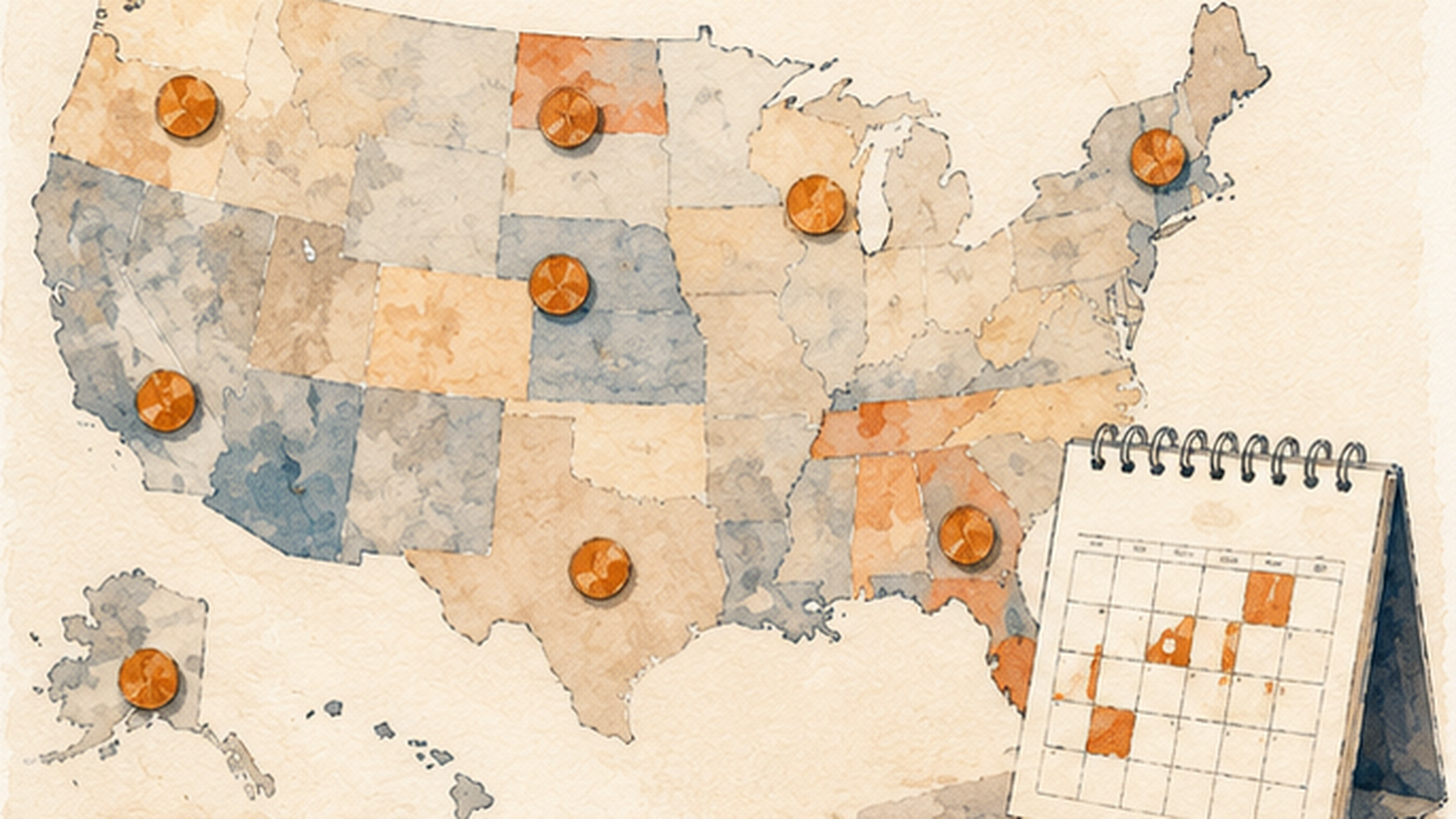
Statute of limitations on debt by state: the full chart
Every state sets its own deadlines, and they change based on the type of debt. The table below shows the number of years for the four main kinds of consumer debt in all fifty states plus the District of Columbia. For most people, the column that matters most is the last one, open ended accounts, because that’s where credit cards live.
| State | Written contract | Oral contract | Promissory note | Open account (credit cards) |
|---|---|---|---|---|
| Alabama | 6 | 6 | 6 | 3 |
| Alaska | 6 | 6 | 3 | 3 |
| Arizona | 6 | 3 | 6 | 6 |
| Arkansas | 5 | 3 | 5 | 5 |
| California | 4 | 2 | 4 | 4 |
| Colorado | 6 | 6 | 6 | 6 |
| Connecticut | 6 | 3 | 6 | 6 |
| Delaware | 3 | 3 | 3 | 4 |
| District of Columbia | 3 | 3 | 3 | 3 |
| Florida | 5 | 4 | 5 | 5 |
| Georgia | 6 | 4 | 6 | 6 |
| Hawaii | 6 | 6 | 6 | 6 |
| Idaho | 5 | 4 | 5 | 4 |
| Illinois | 10 | 5 | 10 | 5 |
| Indiana | 10 | 5 | 10 | 6 |
| Iowa | 10 | 5 | 10 | 5 |
| Kansas | 5 | 3 | 5 | 3 |
| Kentucky | 10 | 5 | 15 | 10 |
| Louisiana | 10 | 10 | 10 | 3 |
| Maine | 6 | 6 | 20 | 6 |
| Maryland | 3 | 3 | 6 | 3 |
| Massachusetts | 6 | 6 | 6 | 6 |
| Michigan | 6 | 6 | 6 | 6 |
| Minnesota | 6 | 6 | 6 | 6 |
| Mississippi | 3 | 3 | 3 | 3 |
| Missouri | 10 | 5 | 10 | 5 |
| Montana | 8 | 5 | 8 | 5 |
| Nebraska | 5 | 4 | 5 | 4 |
| Nevada | 6 | 4 | 3 | 4 |
| New Hampshire | 3 | 3 | 6 | 3 |
| New Jersey | 6 | 6 | 6 | 6 |
| New Mexico | 6 | 4 | 6 | 4 |
| New York | 3 | 3 | 3 | 3 |
| North Carolina | 3 | 3 | 5 | 3 |
| North Dakota | 6 | 6 | 6 | 6 |
| Ohio | 6 | 4 | 8 | 6 |
| Oklahoma | 5 | 3 | 6 | 3 |
| Oregon | 6 | 6 | 6 | 6 |
| Pennsylvania | 4 | 4 | 4 | 4 |
| Rhode Island | 4 | 10 | 10 | 10 |
| South Carolina | 3 | 3 | 3 | 3 |
| South Dakota | 6 | 6 | 6 | 6 |
| Tennessee | 6 | 6 | 6 | 6 |
| Texas | 4 | 4 | 4 | 4 |
| Utah | 6 | 4 | 6 | 4 |
| Vermont | 6 | 6 | 14 | 6 |
| Virginia | 5 | 3 | 6 | 3 |
| Washington | 6 | 3 | 6 | 6 |
| West Virginia | 10 | 5 | 6 | 5 |
| Wisconsin | 6 | 6 | 10 | 6 |
| Wyoming | 10 | 8 | 10 | 8 |
A quick word of caution. These deadlines shift when legislatures rewrite the rules, and a few states word their laws in ways that leave room for argument. Treat this chart as a starting point, then confirm your own state’s current limit before you rely on it, ideally with your state’s official court or attorney general website, or a local consumer attorney.
Why the type of debt changes the deadline
You’ll notice the same state can have four different numbers. That’s because the law treats different agreements differently, and the wording of your original paperwork can decide which clock applies.
An open ended account is any revolving balance you can borrow against again and again, like a credit card or a store line of credit. This is the most common consumer debt, and in many states it has a shorter deadline than a signed loan. A written contract is a signed agreement spelling out the amount, the interest, and the repayment terms, such as a personal loan or an auto loan. An oral contract is a spoken deal with nothing on paper, which is legally real but harder to prove. A promissory note is a written promise to repay a set sum by a set date, common with private or family loans.
If you’re not sure which bucket your debt falls into, that alone is a good reason to talk to someone who knows your state’s rules before you respond to a collector.

When the clock starts, and what can restart it
In most states the clock starts on the date of your last activity on the account, which usually means your last payment. So if you stopped paying a credit card in March of one year and you live in a state with a four year limit, the window generally closes four years later.
Here’s the part that trips people up, and it’s the single most important warning in this whole guide. In many states, doing almost anything that looks like you’re accepting the debt can reset the clock back to zero. Making a small payment can do it. So can promising to pay, or even agreeing to a payment plan over the phone. Collectors know this, which is why a friendly voice might push you to send “just twenty dollars to show good faith.” That small payment can revive a debt that was days from expiring and hand the collector years of fresh time to sue.
This revived, nearly dead debt has a nickname: zombie debt. It’s often sold cheaply to collectors who bank on people not knowing the deadline has passed. Before you pay a penny or admit anything, find out whether your state’s clock has already run out.

What a time barred debt means for you
Say the deadline really has passed. A collector can still call you and ask you to pay, and the debt can still sit on your credit report. What they can’t do is sue you or threaten to sue you. Under federal law, threatening a lawsuit on a time barred debt is illegal.
You still owe the money in a moral sense, and the choice of whether to pay is yours. But you’re in the driver’s seat. If a collector’s calls become harassing, you can send a written request asking them to stop contacting you, sent by certified mail so you have proof. You have rights here worth knowing, and our guide to what debt collectors can and can’t do walks through them in plain language.
One more thing to keep separate in your mind: the credit reporting clock is different from the lawsuit clock. A negative mark can stay on your credit report for seven years whether or not the deadline to sue has passed.
A real world example
Picture Marcus in Texas. He fell behind on a credit card and made his last payment a little over four years ago. Texas gives collectors four years on that kind of account, so the window to sue him has closed.
A collection agency buys the old balance and starts calling. The rep is warm and reasonable, and offers to “settle the whole thing” if Marcus sends a first payment of fifty dollars today. It sounds like a bargain.
If Marcus sends that fifty dollars, Texas may treat it as reviving the debt, and the four year clock could start over. Now the collector can sue him for the full amount. Because Marcus knew his state’s deadline, he didn’t pay on the spot. Instead he asked for the debt in writing, confirmed the dates, and kept his options open. That one bit of knowledge saved him from a lawsuit he never needed to face.
Common mistakes people make
The same avoidable errors show up again and again with old debt.
- Making a “good faith” payment before checking the deadline. This is the mistake that revives more dead debts than any other.
- Admitting the debt is yours over the phone, or agreeing to a payment plan, without knowing whether the clock has already run.
- Ignoring a court summons. Even on a time barred debt, skipping court hands the collector an automatic win.
- Assuming an expired deadline erases the debt from your credit report. It doesn’t. That’s a separate seven year clock.
- Trusting the collector’s math on how old the debt is. Always ask for it in writing and count from your true last payment.
Key takeaways
- The statute of limitations on debt by state sets how long a collector has to sue you, usually three to ten years.
- The deadline depends on the type of debt. For credit cards, look at the open account column.
- The clock usually starts on your last payment.
- Making a payment or admitting the debt can restart the clock in many states, so check before you act.
- Once a debt is time barred, a collector can’t sue you, but it can still call and still report the debt for up to seven years.
Frequently asked questions
Does a debt go away after the statute of limitations expires?
No. The deadline only limits how long a collector can sue you. You still owe the money, the collector can still ask you to pay, and the debt can still appear on your credit report.
Can a collector still call me about an old debt?
Yes. They can contact you even after the deadline passes, as long as they follow the law. What they can’t do is sue you or threaten to sue you once the debt is time barred.
What restarts the statute of limitations?
In many states, making a payment, promising to pay, or agreeing to a payment plan can reset the clock to zero. Always confirm your state’s rules before you do any of these.
Which state’s law applies if I’ve moved?
It depends. Your original card or loan agreement may name a specific state, and the answer can get complicated. When you’re unsure, it’s worth a quick call to a consumer attorney in your state.
How do I know if my debt is time barred?
Find the date of your last payment, match it to your state and the type of debt in the chart above, then confirm the current limit with your state’s court website or an attorney. Ask the collector for the debt in writing before you count on any date they give you.
The bottom line
An old debt can feel scary, but knowledge takes away most of its power. Learn your state’s deadline, know that a single payment can wake a sleeping debt, and never let a collector rush you into paying before you’ve checked the calendar. If a collector is threatening to sue and you think the deadline has passed, or your wages are already being pursued, our guide to how wage garnishment works is a good next read. For the federal view on old debt, the Consumer Financial Protection Bureau explains your rights on collecting debt that’s several years old.
This article is general information only, not legal advice, and reading it doesn’t create an attorney client relationship. Laws about debt and time limits vary by state and change over time. Before you act on an old debt, please talk with a licensed attorney in your state about your specific situation.