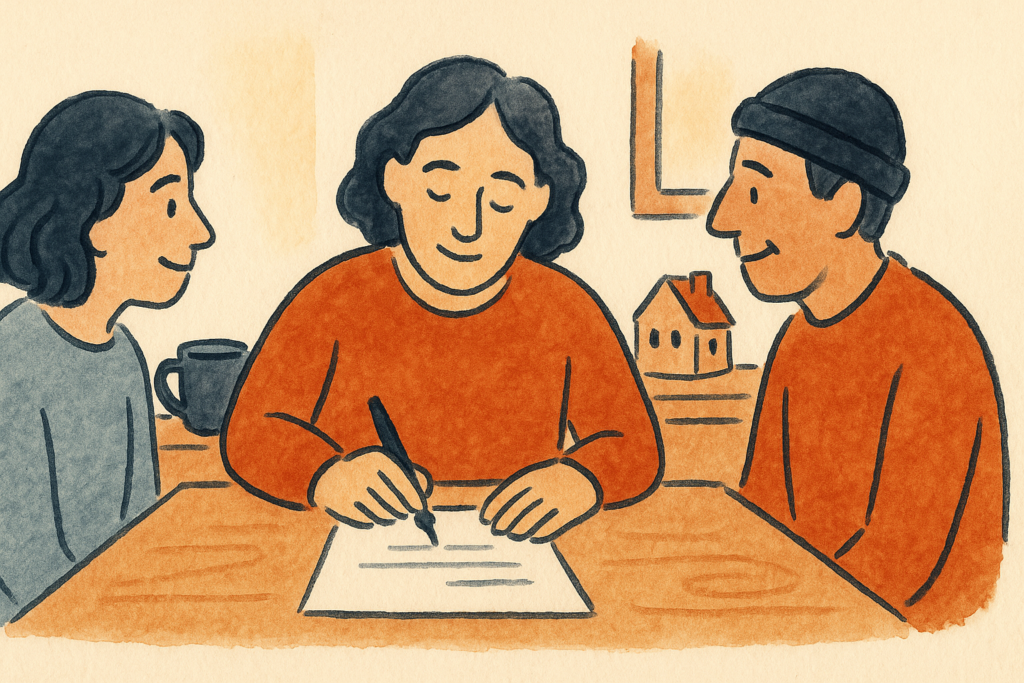
My neighbor Tom put off writing his will for thirty years. He wasn’t lazy about it. He just figured it meant a lawyer’s office, an afternoon off work, and a bill he didn’t want to open. So he kept nudging it down the list until a health scare moved it to the top. When he sat down to do it, he was surprised how little he needed. A pen, two neighbors, and about an hour at the kitchen table.
That’s the part most people miss. For a straightforward estate, you don’t need a law degree or a fat retainer to get your wishes in writing. The law in every state lets ordinary people write their own wills, and most homemade wills hold up fine as long as you follow a few basic rules. The trouble usually isn’t the writing. It’s the signing, and we’ll get to why.
This guide covers how to make a will without a lawyer in plain steps, plus the handful of situations where you really ought to call an attorney instead.
When writing your own will is fine, and when it isn’t
If your situation is simple, a do it yourself will is a reasonable choice. Picture one home, some savings, a car, and a clear idea of who gets what. Maybe you want everything to go to your spouse, and then to be split between your kids. That’s exactly the kind of estate a homemade will handles well.
There are times to hand this off to a professional, though. Call a lawyer if your estate is large enough to worry about federal estate tax, which in 2026 only kicks in above roughly $15 million per person, so that’s a small club. Also call one if you own a business, if you hold property in more than one state, if you have a blended family with stepchildren and exes in the picture, or if you plan to cut out a spouse or child. Those cases invite disputes, and a few hundred dollars of legal help now can spare your family a courtroom fight later. If you’re on the fence, our guide on whether you need a lawyer to make a will breaks down the red flags. For everyone else, here’s how the pieces fit together.
What makes a will legal in the first place
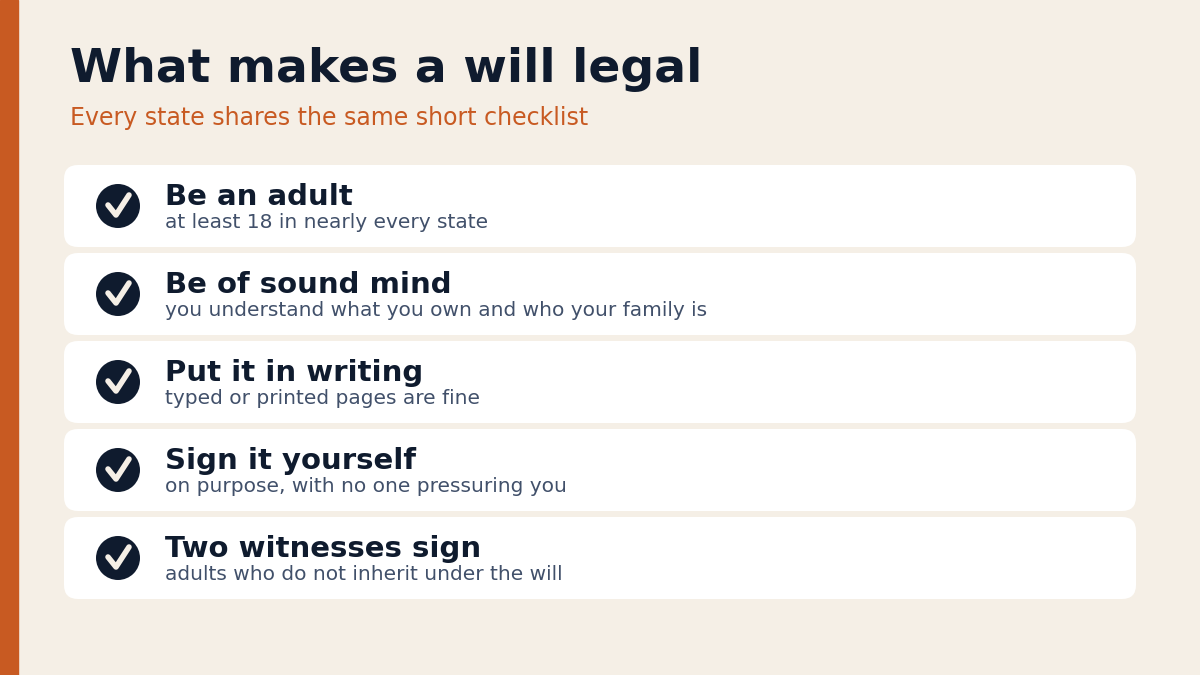
Every state shares the same short list of requirements, and not one of them involves a lawyer.
You have to be an adult, which means at least 18 in nearly every state. You have to be of sound mind, meaning you understand what you own, who your family is, and that the paper you’re signing is a will. You have to put it in writing. You have to sign it yourself, on purpose, with nobody pressuring you. And in most states, two witnesses have to watch you sign and then sign it themselves.
That’s the whole test. A will scribbled on notebook paper can be just as valid as one printed on fancy letterhead, as long as it checks those boxes.
How to make a will without a lawyer, step by step
Once you know the rules, the process is short. Here’s how to make a will without a lawyer from start to finish.
Start by listing what you own and who you want to have it. Your house, your accounts, your vehicles, and anything with real or sentimental value. Then decide who gets what. Be specific about the big items and about the keepsakes people tend to argue over.
Next, name an executor. This is the person who carries out your wishes, pays your final bills, and closes the estate. Pick someone organized and trustworthy, and ask them before you write their name down. If you have young children, name a guardian too. That’s often the most important line in a young parent’s will, because it tells a judge who should raise your kids if you no longer can.
Then write it all down. You can use a plain document, a reputable online will service, or a template made for your state. Include a line that revokes any earlier wills so there’s no confusion about which one counts. Add a residuary clause, a catch all that says who gets anything you didn’t name specifically. It quietly prevents a lot of headaches. Read it over, make sure it says what you mean, and then move to the step that trips up the most people.

The signing is where homemade wills fall apart
Here’s the hard truth. A perfectly written will can still be thrown out at probate for one reason: it wasn’t signed the right way. This is the single most common way do it yourself wills fail.
In most states you need two witnesses, and they need to be disinterested, which is a lawyer’s word for people who don’t inherit anything under the will. A neighbor, a coworker, a friend from church. Not your daughter who’s getting the house. If a witness stands to gain, a court may cancel their gift or question the whole document. Everyone should sign the same copy, in the same room, watching one another.
You can also add a self proving affidavit. That’s a short notarized statement where you and your witnesses swear the will was signed properly. It isn’t required for your will to be valid, but it’s worth the small trouble. Without it, your witnesses might have to appear in probate court years later just to vouch for your signature. With it, the will can usually be accepted on its own. One caution people get wrong all the time: notarizing your will does not replace the witnesses. Witnessing is the part that makes it legal. The notary only makes probate smoother. If you’re curious what your family goes through afterward, here’s our plain English look at how probate actually works.

What about a handwritten will?
You’ve probably heard of a will written entirely by hand. Lawyers call it a holographic will, and some states accept one with no witnesses at all, as long as it’s in your own handwriting, dated, and signed.
It sounds easy, and in a real pinch it can save the day. But it’s the riskier road. Handwritten wills get challenged more often, they’re easier to misread, and plenty of states won’t honor them at all. A few of the states that do allow them, like Texas, won’t accept a store bought form you filled in by hand. If you’re going to take the time to make a will, take the extra hour to do a witnessed one the right way.
A real world example
Consider Maria, a 58 year old widow with a paid off house, a savings account, and two grown children. She didn’t want to hire a lawyer for something this simple. She listed her assets, named her older son as executor, and split everything evenly between the two kids. She used a template made for her state, printed it, and asked two neighbors to witness her signature at the kitchen table. Then the three of them signed a self proving affidavit in front of a notary at her bank, which cost her nothing as an account holder.
Total out of pocket: a few dollars for printing. Total time: one quiet afternoon. When Maria passes, her children will have a clean, court ready will instead of a mess. That’s the whole point of doing it right.

Common mistakes people make
- Signing it wrong. No witnesses, or witnesses who inherit. This sinks more homemade wills than anything else on this list.
- Using pencil or correction fluid. Any sign of tampering invites a challenge. Use pen, and if you botch a line, start a fresh copy.
- Forgetting to revoke old wills. An old will floating around can contradict the new one and leave the court guessing.
- Leaving out a residuary clause. Anything you don’t mention can pass under state law instead of the way you wanted.
- Hiding it too well. A will nobody can find is as good as no will at all. Tell your executor where the original lives.
- Never updating it. A new marriage, a divorce, a new baby, or a big change in what you own all call for a fresh look.
Key takeaways
Learning how to make a will without a lawyer really comes down to a few basics for a simple estate, and the law doesn’t require an attorney to do any of it. Get the requirements right, be specific about who gets what, name an executor and a guardian if you need one, and above all sign it in front of two disinterested witnesses. Add a self proving affidavit to make probate easier down the road. Then save the professional help for the complicated estates that truly need it.
Frequently asked questions
Is a will legal without a lawyer?
Yes. Every state lets you write your own will. As long as you meet your state’s rules for age, sound mind, writing, signature, and witnesses, a homemade will is just as binding as one an attorney drafts.
Does a will have to be notarized?
In most states, no. A will is made valid by your signature and your witnesses, not by a notary. Notarizing a self proving affidavit is optional but helpful, since it can spare your witnesses a trip to probate court later.
How many witnesses does a will need?
Most states require two adult witnesses who don’t inherit under the will. A few states recognize handwritten wills with no witnesses, but a witnessed will is the safer bet everywhere.
Can I write my will on plain paper?
Yes. There’s no special paper or magic format. Plain typed or printed pages are fine, as long as it’s clearly meant to be your will, it’s signed, and it’s properly witnessed.
Where should I keep my will after I sign it?
Somewhere safe but reachable, like a fireproof box at home. Avoid a bank safe deposit box that can get sealed at death. Most important of all, tell your executor where to find the original.
The bottom line
Writing a will yourself isn’t about cutting corners. It’s about finally getting your wishes on paper so your family isn’t left guessing during a hard week. Do it carefully, sign it in front of the right witnesses, and store it where someone will actually find it. An hour at the kitchen table now is one of the kindest things you can leave behind.
This article is general information only, not legal advice, and reading it does not create an attorney client relationship. Laws about wills vary from state to state and change over time. Before you finalize your will, please confirm your own state’s rules or talk with a licensed attorney in your state about your specific situation.