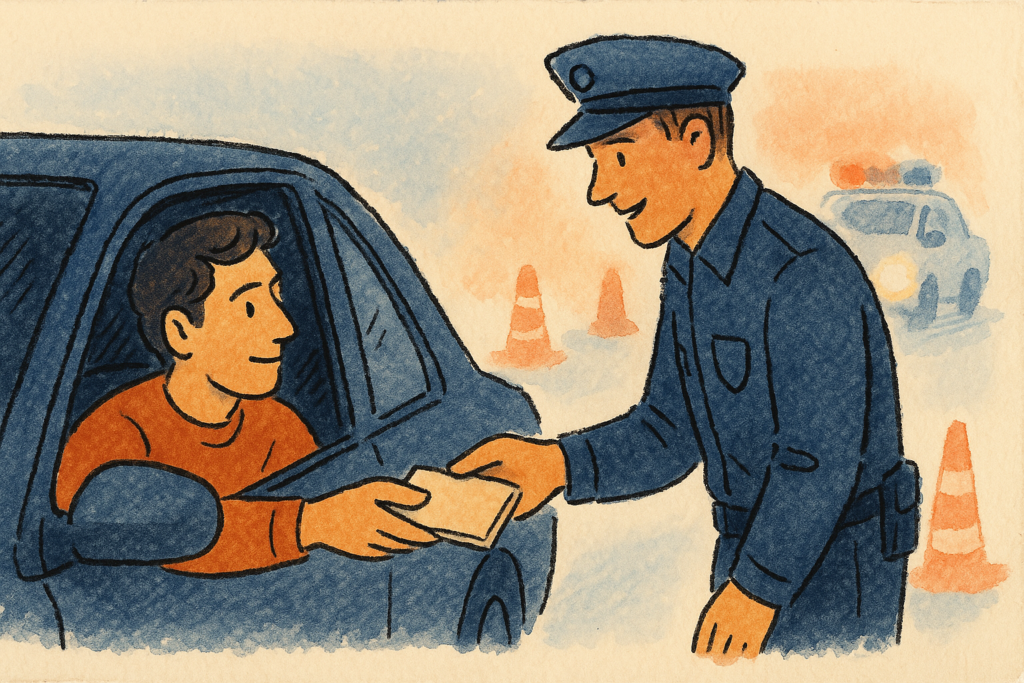
You round a bend on a quiet road late at night and there they are: a row of orange cones, patrol cars, and an officer waving a flashlight to slow you down. Your stomach drops a little even though you’ve done nothing wrong. In that moment, a lot of good people forget what they can and can’t do, so they either say too much or get defensive when there was no need for either.
So let’s clear it up while you’re calm and reading this at home, not squinting into a flashlight. A sobriety stop like this is usually legal, and you do have to cooperate in some specific ways. But you also keep real protections. Knowing your dui checkpoint rights ahead of time is the difference between a two minute stop and a night that goes sideways.
Here’s the short version. You have to stop, and you have to hand over your documents. You do not have to chat about your evening. And there’s exactly one refusal that can genuinely cost you, which we’ll get to.
Are DUI checkpoints even legal?
In most of the country, yes. Back in 1990, the U.S. Supreme Court decided a case called Michigan Department of State Police v. Sitz. The Court ruled that brief sobriety stops are allowed under the Fourth Amendment, even though police aren’t suspecting you personally of anything. The reasoning was that the state’s interest in getting drunk drivers off the road outweighs the small inconvenience of a quick stop.
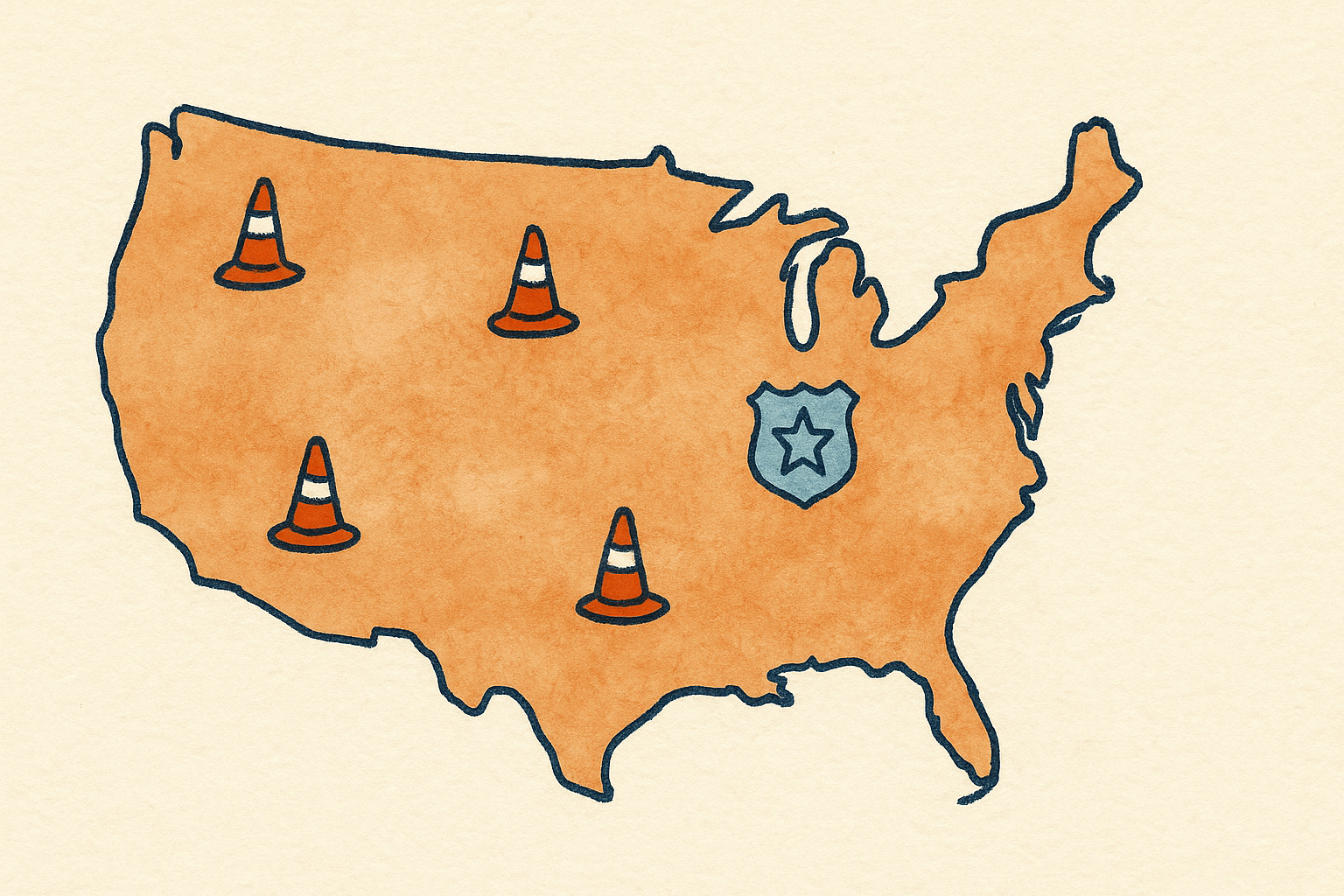
That would seem to settle it, but here’s the twist. States are free to give their own residents more protection than the federal Constitution requires, and a number of them have. Roughly 12 states ban sobriety checkpoints under their own constitutions or laws, including Texas, Idaho, and Michigan itself after its own supreme court weighed back in. In the other 38 states plus Washington, D.C., checkpoints are legal as long as police follow certain rules, like announcing them in advance and stopping cars in a fixed pattern rather than picking drivers at random.
The practical takeaway is simple. Whether a checkpoint is even allowed depends on your state, so it’s worth knowing your own state’s rule before you need it.
What you have to do when you’re stopped
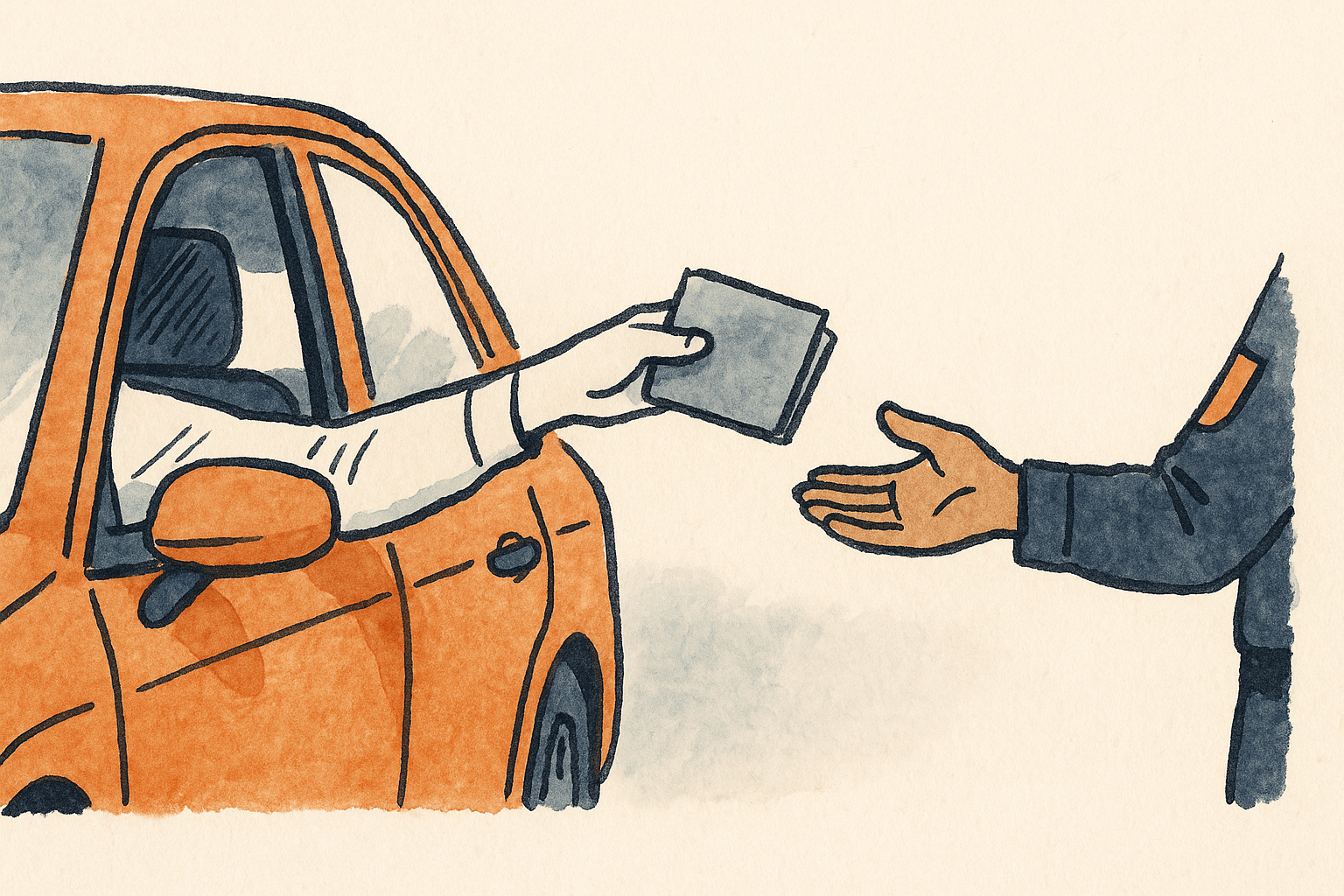
When an officer directs you into a checkpoint lane, you have to stop and roll down your window. Trying to speed off or refuse to pull over turns a routine stop into a serious problem in a hurry.
You also have to identify yourself and your vehicle. That means you must show your license, registration, and proof of insurance when the officer asks. This part isn’t optional, and it’s the same thing you’d hand over at any traffic stop. Have them ready so you’re not digging through the glove box while someone watches you fumble.
Beyond that, keep it calm and boring. Turn on your interior light if it’s dark, keep your hands where the officer can see them, and be polite. None of that is a legal requirement, but it lowers the temperature and gets you through faster.
Your DUI checkpoint rights: what you can politely decline
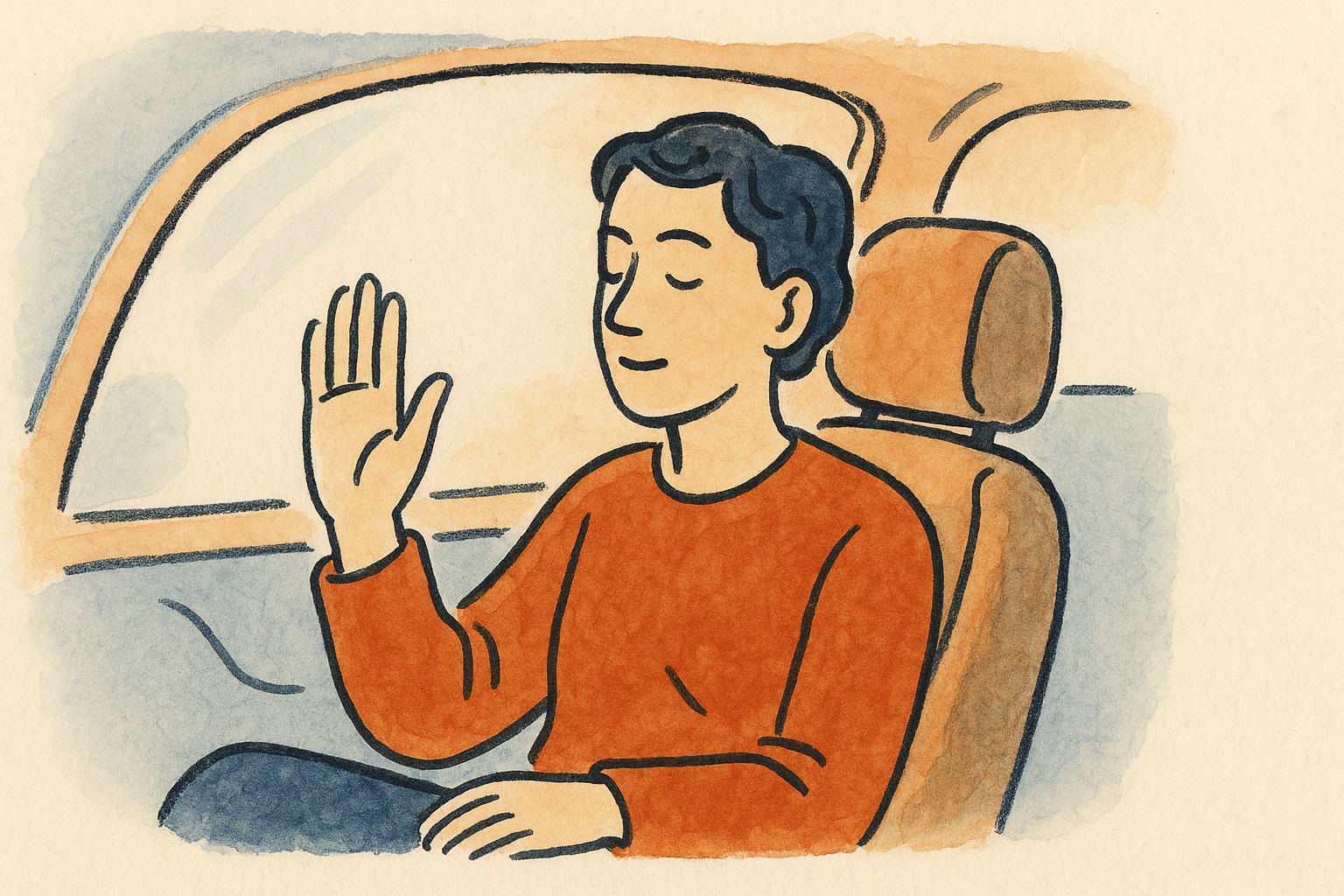
This is where a lot of folks trip themselves up. The officer may ask something like, “Where are you headed tonight? Have you had anything to drink?” These sound friendly, and it feels rude not to answer. But you have the right to stay quiet. The Fifth Amendment protects you from having to say things that could be used against you, and that applies right there at the window.
You don’t have to be a jerk about it. You can simply say something like, “Officer, I’d rather not answer questions.” Then stop talking. You’re not required to explain where you were or admit to a single glass of wine at dinner. Answering “just two beers” has helped convict a lot of drivers who were nowhere near the legal limit.
The roadside tests are another gray area worth understanding. If an officer asks you to follow a pen with your eyes, walk a straight line, or blow into a small handheld device at the scene, those are field sobriety tests and a preliminary breath test. In most states, these roadside tests are voluntary, and you can decline them. They’re designed to give the officer evidence, and they’re famously easy to fail even sober, thanks to nerves, bad footing, or a medical condition. Declining them politely is often the smarter move, though it may still lead the officer to detain you if they already suspect impairment.
The one refusal that carries a real penalty
Here’s the exception you have to know, because this is where refusing actually hurts. Every state has an implied consent law. By getting a driver’s license, you’ve already agreed in advance to take an official chemical test, usually of your breath or blood, if you’re lawfully arrested for drunk driving.
So there’s an important line here. The little handheld test at the roadside before any arrest is usually optional. But the formal test that comes once you are lawfully arrested and taken in is a different animal. Refuse that one, and most states hit you with an automatic license suspension, often for months or longer, completely separate from whatever happens with the DUI charge itself. In some states a refusal can be used against you in court too.
That’s why blanket advice like “never take any test” is dangerous. Refusing the roadside screening and refusing the chemical test after arrest are two very different decisions with very different consequences.
Can you turn around to avoid a checkpoint?
You can, and it’s legal, but there’s a catch. If you spot a checkpoint ahead and there’s a legal turn or a side street before it, you’re allowed to take it. Police can’t stop you just for choosing a different route.
The catch is that you cannot break a traffic law to do it. An illegal U turn, cutting across a double yellow line, or rolling through a stop sign gives the officer a completely lawful reason to pull you over, and now you’ve drawn more attention than if you’d just driven through. If you’re going to take an alternate route, do it cleanly and by the book.
A real world example
Picture Dana driving home from a friend’s birthday dinner. She had one glass of wine three hours ago and she’s stone sober, but she’s tired and a bright checkpoint makes her jumpy. She rolls down her window, hands over her license, registration, and insurance without a word of complaint.
The officer asks if she’s been drinking. Dana says calmly, “I’d rather not answer questions.” He asks her to do a few roadside tests. Knowing they’re voluntary in her state, she politely declines those too. Because the officer smells nothing and sees no slurring, he has no real basis to arrest her. He hands back her documents and waves her through. Dana didn’t argue, didn’t lie, and didn’t hand over evidence he didn’t already have. That is what knowing your DUI checkpoint rights looks like in practice.
Common mistakes people make
The biggest one is talking too much. Nerves make people over explain, and “I only had a couple” is an admission, not a defense. Stay brief and stay quiet about your evening.
The second is getting combative. You can assert your rights and still be respectful. Arguing, raising your voice, or refusing to hand over your license doesn’t protect you; it just escalates things and can lead to charges that have nothing to do with drinking.
The third is confusing the two kinds of tests. People hear “you can refuse the breath test” and think it always applies. Refusing the roadside handheld device is usually fine. Refusing the official test after an arrest can cost you your license under implied consent. Keep those two straight.
The last one is making an illegal move to dodge the stop. Turning around is legal; running a stop sign to do it is not, and that hands the officer exactly the reason they need.
Key takeaways
- Sobriety checkpoints are legal in most states but banned in about a dozen, so your rights depend on where you live.
- You must stop and show your license, registration, and insurance.
- You can politely decline to answer questions and, in most states, decline the roadside field sobriety and handheld breath tests.
- Refusing the official chemical test after a lawful arrest triggers an automatic license suspension in most states.
- You may take a legal alternate route to avoid a checkpoint, but never break a traffic law to do it.
Frequently asked questions
Do I have to answer questions at a DUI checkpoint?
No. You have to identify yourself and show your documents, but you can decline to answer questions about where you’ve been or whether you’ve been drinking. A simple “I’d rather not answer” is enough.
Can I refuse a breathalyzer at a checkpoint?
Usually you can refuse the small handheld device at the roadside before any arrest, because that one is voluntary in most states. The official test after a lawful arrest is different, and refusing it means an automatic license suspension under your state’s implied consent law.
Is it illegal to turn around before a DUI checkpoint?
No, as long as you make a legal turn. Police can’t stop you just for avoiding a checkpoint. But if you break any traffic law while turning around, that gives them a lawful reason to pull you over.
Do I have to get out of my car if asked?
Generally, if an officer clearly directs you to step out, you should comply, because refusing a lawful order can lead to arrest. You can still stay quiet and decline voluntary tests once you’re outside the car.
What happens if I get arrested at a checkpoint?
Stay calm and stop talking beyond giving your name. Ask for a lawyer. Anything you say can be used later, and a quiet, respectful response protects you far better than an explanation does.
The bottom line
A checkpoint doesn’t have to rattle you. Your DUI checkpoint rights come down to a few simple habits: stop, be polite, hand over your documents, and keep your evening to yourself. Know which refusal is free and which one costs you a license. Do that, and you’ve handled the whole thing the way a calm, informed driver should.
This article is general information only and is not legal advice. Reading it does not create an attorney client relationship. Laws about sobriety checkpoints, implied consent, and license suspension vary quite a bit from state to state and change over time. For advice about your own situation, please talk with a licensed attorney in your state.