Picture coming home to find a note taped to your door. Your landlord let himself in while you were out to show the place to a buyer, and he never asked first. Or you move out, leave the apartment spotless, and three weeks later there’s still no sign of your deposit. Moments like these leave a lot of renters wondering what’s actually allowed.
Here’s the reassuring part. California gives renters some of the strongest protections in the country, and a good deal of what frustrates tenants is flat out against the rules. Your landlord owns the building, but they don’t get to make up the rules as they go along.
Once you understand your California tenant rights, you can spot when someone crosses one of those lines and push back calmly. Let’s walk through the big ones: your deposit, your rent, eviction, repairs, and when a landlord can come inside.
Your deposit is capped, and the clock is ticking
As of July 1, 2024, a state law known as AB 12 capped most security deposits at one month’s rent, whether the place comes furnished or not. That’s a big change. For years, landlords could ask for two or even three months up front.
There’s one exception. A small landlord who owns no more than two rental properties, with four or fewer units total, can still ask for up to two months’ rent. For most renters, though, one month is now the ceiling.
After you move out and give back the keys, your landlord has 21 calendar days to either return your full deposit or mail you an itemized statement showing what they kept and why. If they hold back more than a small amount for repairs, they have to back it up with receipts or estimates. A newer rule, AB 2801, now has landlords photograph the unit before and after your tenancy, which makes it harder to invent damage. If your money doesn’t come back the way it should, our guide on getting your security deposit back covers the next steps.

What California tenant rights say about rent increases
Rent going up is a fact of life, but in California it can’t go up by just any amount. A statewide law called the Tenant Protection Act, or AB 1482, caps yearly increases for many units at 5 percent plus your local rate of inflation, or 10 percent, whichever number is lower. In most of the state that lands somewhere around 8 to 10 percent in a single year.
Your rent can also only go up once every 12 months, and your landlord has to give written notice first. A smaller increase usually needs 30 days’ notice, and a larger one needs 90 days.
Not every home is covered, though. Single family houses and condos are often exempt if the owner gives you written notice, and so are buildings finished within the last 15 years. Cities like Los Angeles and San Francisco also have their own rent control rules that can be stricter, and the rule that protects you more is usually the one that applies.
A landlord can’t evict you just because they feel like it
This is the one that trips people up most, so it’s worth being clear. Once you’ve lived somewhere for a year, your landlord needs what the law calls just cause to end your tenancy. That means a real reason, not a mood.
Some reasons are on you, like not paying rent or seriously breaking the lease. Others have nothing to do with you, like the owner wanting to move in or gut remodel the place. When the reason is no fault of yours, the landlord usually owes you relocation help equal to one month’s rent.
Here’s the part that matters no matter the reason: a landlord can never lock you out, shut off your water or power, or set your belongings on the curb. Doing the eviction themselves is illegal in California, and it can cost them a penalty for every violation. The only legal path runs through a written notice, a court case called an unlawful detainer, a judge’s decision, and finally a sheriff. Starting in 2026, you get 10 business days to respond to that lawsuit, up from 5. If you’re ever served, read our piece on fighting an eviction and find free legal aid fast. You can also check the eviction self help guide from the California Courts.
Your home has to be livable, and repairs are on your landlord
Every rental in California comes with something called the implied warranty of habitability. It’s a fancy phrase for a simple promise: the place has to be fit to live in. That means working plumbing, heat, hot water, safe wiring, a weatherproof roof and windows, and no serious pest problem. You can’t sign this away, no matter what a lease says.
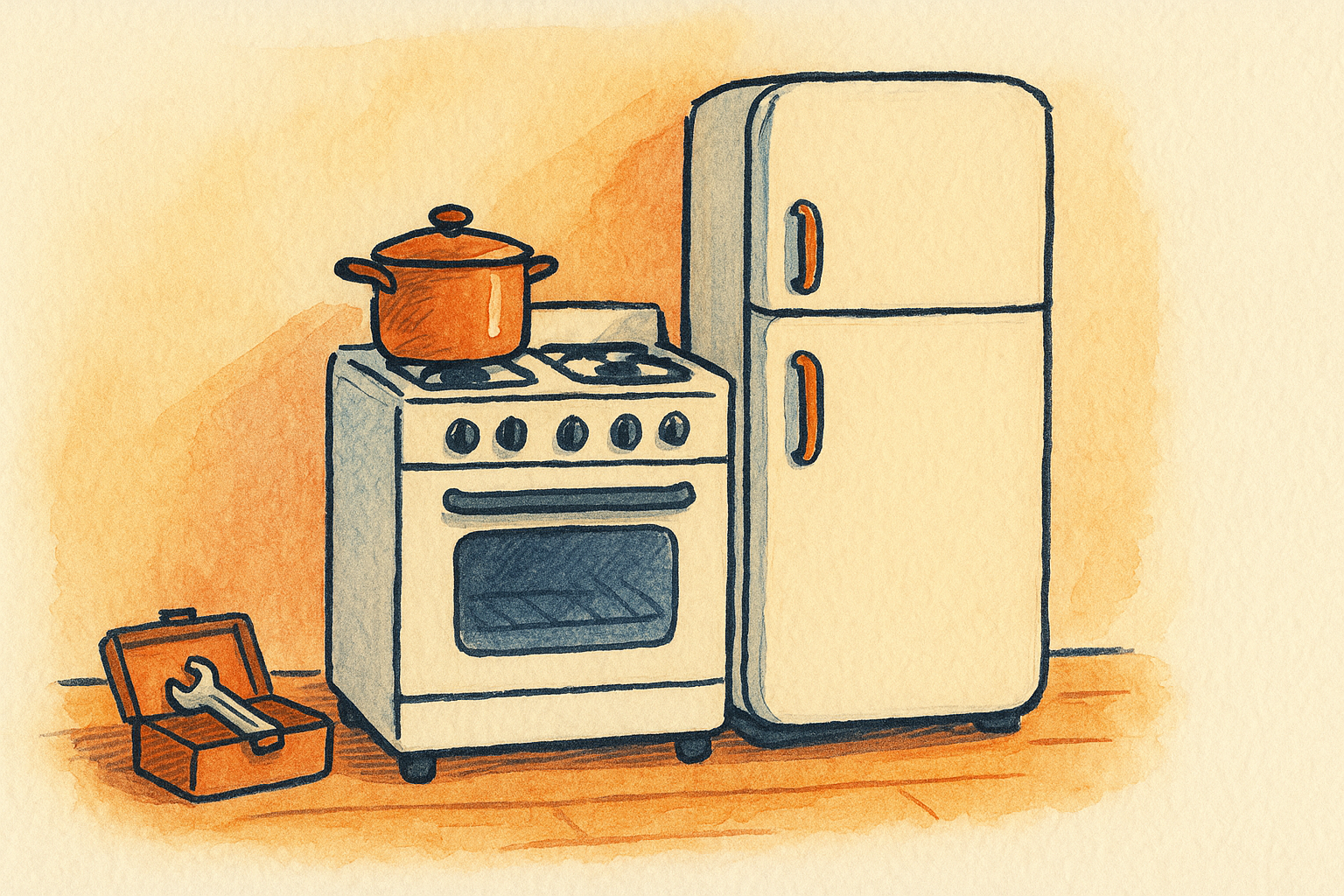
As of January 1, 2026, that list officially grew to include a working stove and refrigerator under a law called AB 628. So a broken fridge isn’t just annoying anymore, it’s a habitability issue your landlord has to fix.
When something serious breaks, tell your landlord in writing and give a reasonable amount of time, often around 30 days, or less if it’s urgent like no heat in winter. If they ignore you, you may be able to use repair and deduct: pay to fix the problem and subtract the cost from your rent, as long as it’s no more than one month’s rent and you use it no more than twice a year. Withholding rent is another option, but it’s risky and easy to get wrong, so document everything and get advice first.
Your landlord can’t just let themselves in
Your home is still your home, even though you rent it. California Civil Code 1954 gives you a right to privacy and quiet enjoyment, and it limits when a landlord can come inside.
In almost every case, your landlord has to give reasonable written notice first, and 24 hours is treated as reasonable. The notice needs to say the date, a rough time, and why they’re coming, and they can only enter during normal business hours. The reasons are limited too: to make repairs, to show the unit to a buyer, renter, or contractor, to supply a service you agreed to, or in a true emergency.
An emergency is the only time notice goes out the window, and that means a fire, a suspected gas leak, or a burst pipe, not a landlord who’s simply curious. If yours keeps showing up unannounced, that pattern can count as harassment.
A quick real world example
Take Elena, who rents a two bedroom in Sacramento. One morning her landlord texts that he’s stopping by in an hour to look at a leak. Elena knows a last minute text isn’t proper notice, so she asks for the written notice the law calls for and suggests the next afternoon. He sends a note and fixes the leak the following day.
A month later he tries to raise her rent 15 percent. Elena checks the cap for her area, sees it’s closer to 9 percent, and shows him the number. He corrects it. She didn’t threaten anyone or hire a lawyer. She just knew where the lines were.

Common mistakes people make
- Keeping everything verbal. A friendly phone call feels easier, but a text, email, or letter creates the paper trail you’ll want if things go sideways.
- Withholding rent on a hunch. Rent withholding has strict rules, and skipping steps can hand your landlord a reason to evict you.
- Assuming every unit is covered. Some single family homes, condos, and newer buildings are exempt from the rent cap, so check before you count on it.
- Sitting on a late deposit. If day 21 comes and goes with no deposit and no statement, send a written demand, then consider small claims court.
- Believing the lease over the law. A clause that tries to waive your right to a livable home or proper notice isn’t enforceable, no matter what you signed.
Key takeaways
- Most deposits are capped at one month’s rent, and your landlord has 21 days to return it or explain the deductions.
- Covered rentals can only see one increase a year, capped by AB 1482.
- Eviction has to go through the courts. A lockout or utility shutoff is illegal.
- Your home must stay livable, and serious repairs are the landlord’s job.
- Expect 24 hours of written notice before your landlord enters, except in a genuine emergency.
Frequently asked questions
Can my landlord raise my rent as much as they want in California?
Usually not. If your unit is covered by AB 1482, the yearly increase is capped at 5 percent plus local inflation, or 10 percent, whichever is lower. Some homes are exempt, but even then the landlord still has to give proper written notice first.
How long does my landlord have to return my deposit?
21 calendar days from the day you move out and return the keys. In that window they must either send your full deposit back or give you an itemized statement of what they kept, with receipts for anything over a modest amount.
Can a landlord evict me without going to court?
No. In California only a sheriff can carry out an eviction, and only after a landlord wins a court case. Changing the locks, shutting off utilities, or removing your things is illegal and can leave the landlord owing you money.
What can I do if my landlord won’t make repairs?
Put the request in writing and give a reasonable amount of time to fix it. If your landlord still ignores a serious problem, you may be able to repair and deduct up to one month’s rent, or use other remedies. Because the rules are strict, get advice before withholding any rent.
Do these rights apply to every renter in California?
Most apply broadly, including the right to a livable home and to notice before entry. A few, like the rent cap and just cause eviction rules, have exemptions for certain single family homes, condos, and newer buildings.
The bottom line
You don’t need to memorize statute numbers to stand up for yourself. Just remember the shape of it: your deposit is capped and comes back on a deadline, your rent can’t jump without limit, your home has to stay livable, and nobody can lock you out or walk in without notice. Knowing your California tenant rights turns a stressful standoff into a calm conversation, which is usually all it takes to get things put right.
This article is general information only, not legal advice, and reading it doesn’t create an attorney client relationship. Landlord and tenant laws vary by state and city and change over time, and your local rules may add protections beyond what’s described here. For guidance on your own situation, please talk with a licensed attorney in your state.